

10 Pest Control Marketing Ideas That Drive Real Results
Most pest control companies get started the same way: word of mouth, a few yard signs, and maybe a listing on Google. That works for a while. But eventually, the phone stops ringing as often, the slow season hits harder than expected, and you realize you need a real plan to keep leads coming in.
The good news? You do not need a massive budget to market a pest control business effectively. You just need the right pest control marketing ideas and the consistency to follow through. In this guide, we will walk through 10 proven strategies that pest control companies are using right now to attract more customers, book more jobs, and grow revenue.
1. Claim and Optimize Your Google Business Profile
If you only do one thing on this list, make it this. Your Google Business Profile (GBP) is the single most important piece of digital real estate for a local pest control company. When someone searches "pest control near me" or "exterminator in [your city]," Google pulls results from GBP listings first, before any website.
Here is how to get the most out of it:
- Complete every field. Business name, address, phone number, hours, service area, website link, and business description should all be filled in accurately.
- Choose the right categories. "Pest control service" should be your primary category. Add secondary categories like "exterminator" or "termite control service" if they apply.
- Add photos regularly. Upload pictures of your team, your trucks, before-and-after treatment photos (with permission), and your office. Businesses with photos get 42% more requests for directions and 35% more website clicks, according to Google.
- Post updates weekly. Google lets you publish posts directly to your profile. Share seasonal tips ("Why spring is peak termite season"), promotions, or company news.
A fully optimized GBP is the foundation of pest control SEO and the fastest way to show up when local homeowners are searching for help.
2. Build a Website That Converts Visitors Into Calls
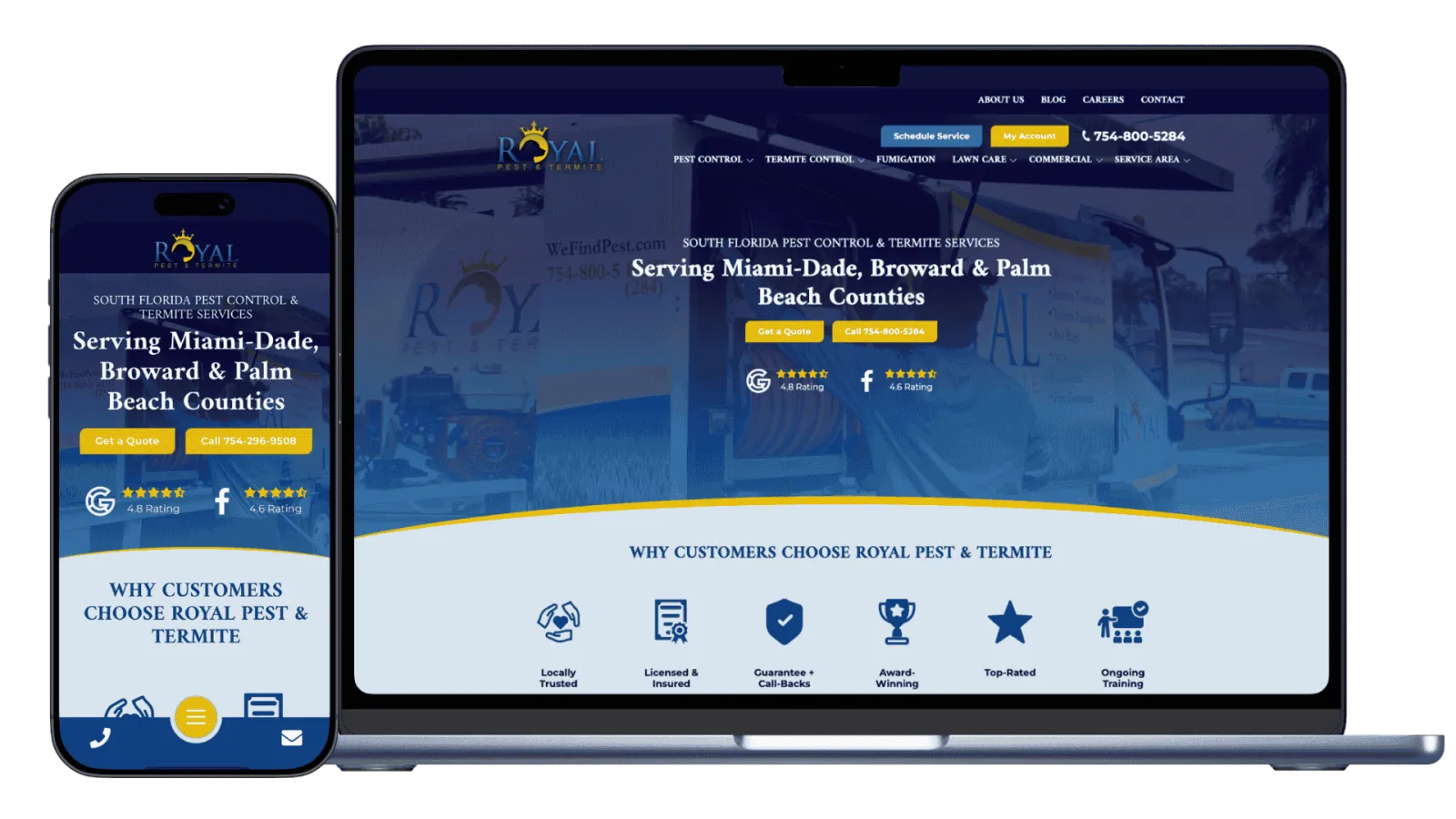
Having a website is not enough. Your website needs to do one job well: turn visitors into phone calls or form submissions. Too many pest control websites look outdated, load slowly, or make it hard to actually contact the company.
Focus on these essentials:
- Put your phone number in the header. Make it clickable on mobile devices. Every page should make it obvious how to reach you.
- Create separate pages for each service. Do not lump termite control, mosquito treatment, rodent removal, and general pest control onto one page. Individual service pages rank better in search results and speak directly to what each customer needs.
- Add trust signals. Display your license number, insurance information, customer reviews, and any certifications (QualityPro, GreenPro, state associations). Homeowners want to know they are hiring someone legitimate.
- Make sure it loads fast. If your site takes more than three seconds to load on a phone, you are losing potential customers. Use Google PageSpeed Insights to check your score and identify problems.
Your website is the hub of all your pest control marketing strategies. Every other tactic on this list drives people back to it, so it needs to perform.
3. Invest in Local SEO to Show Up in Search Results
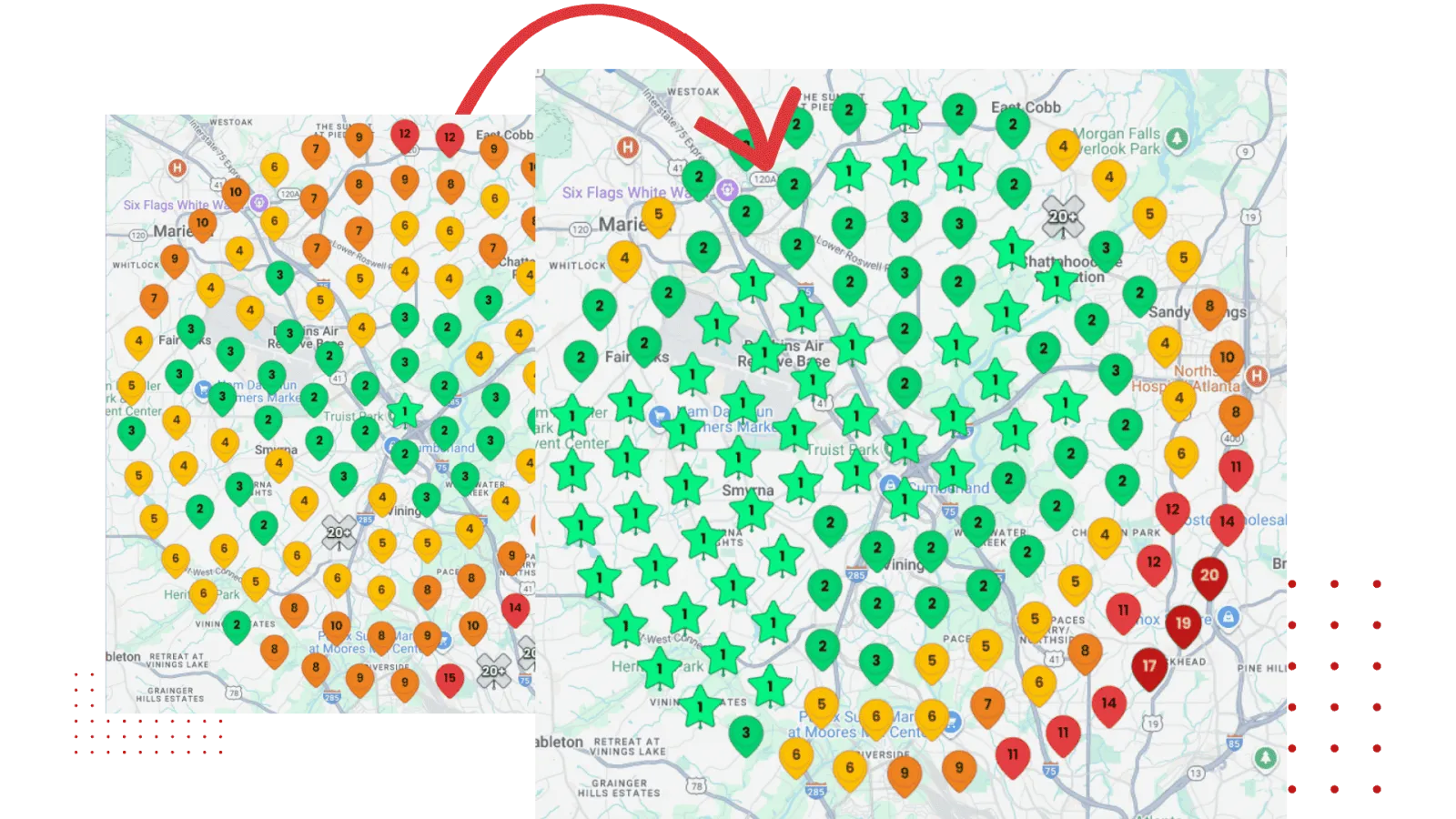
Local SEO is the process of optimizing your online presence so you appear in search results when people in your service area are looking for pest control. It goes beyond your Google Business Profile and includes your website, online directories, and review profiles.
Key local SEO tactics for pest control companies include:
- NAP consistency. Your business Name, Address, and Phone number should be identical everywhere it appears online: your website, Google, Yelp, Angi, the Better Business Bureau, and any other directory.
- Local keyword targeting. Include city and neighborhood names on your website. Instead of just "pest control services," write "pest control services in Tampa, FL" or "bed bug treatment in South Tampa."
- Build local citations. Get listed in directories that matter for home services: Angi, HomeAdvisor, Thumbtack, Yelp, and your local Chamber of Commerce.
- Earn backlinks from local sources. Sponsor a Little League team, partner with a local real estate agency, or contribute a pest prevention article to a neighborhood blog. These local backlinks signal trust to Google.
Ranking in the local map pack and organic results is one of the most cost-effective pest control lead generation channels because the traffic is free once you earn it.
4. Get More Online Reviews (And Respond to Every One)
Reviews are not just social proof. They are a ranking factor. Pest control companies with more high-quality Google reviews tend to appear higher in local search results. And from the customer's perspective, reviews are often the deciding factor between calling you or calling your competitor.
Here is a simple system for generating reviews consistently:
- Ask at the right moment. The best time to ask for a review is right after you have solved a customer's problem. If a homeowner is relieved that the wasp nest is gone, that is the moment to say, "Would you mind leaving us a quick review on Google?"
- Make it easy. Send a follow-up text or email with a direct link to your Google review page. Do not make customers search for you.
- Respond to every review. Thank people for positive reviews and address negative ones professionally. Potential customers read your responses, and how you handle criticism says a lot about your business.
Aim for at least five new reviews per month. Over time, this builds a powerful reputation that drives both rankings and conversions.
5. Run Google Ads for Immediate Pest Control Leads
SEO is a long-term play. If you need leads this week, Google Ads (pay-per-click advertising) is the fastest path. When someone searches "pest control near me," your ad can appear at the very top of the results page, above the map pack and organic listings.
Tips for running effective pest control PPC campaigns:
- Start with Google Local Services Ads (LSAs). These "Google Guaranteed" ads appear above standard PPC ads and you only pay when someone actually calls you. For pest control companies, LSAs often deliver the best return on ad spend.
- Target high-intent keywords. Bid on terms like "pest control [city]," "emergency exterminator near me," and "termite inspection [city]." Avoid broad terms like "bugs" or "pests" that attract people who are not looking to hire anyone.
- Use ad extensions. Add your phone number (call extension), address (location extension), and links to specific service pages (sitelink extensions) to take up more space on the results page.
- Set a budget you can sustain. It is better to run a consistent $500/month campaign than to spend $2,000 one month and nothing the next. Consistency lets you gather data and optimize over time.
Paid advertising is one of the most reliable pest control advertising ideas for companies that want predictable, measurable lead flow.
6. Use Social Media to Build Trust (Not Just Post Memes)
Social media for pest control is not about going viral. It is about staying visible in your community and building trust with potential customers before they ever need your services.
Facebook is the most effective platform for most pest control companies. Here is what to post:
- Educational content. "5 signs you might have termites" or "Why you see more ants after it rains" -- this kind of content gets shared and positions you as the local expert.
- Behind-the-scenes photos. Show your team in action, your trucks getting wrapped, or a technician earning a new certification. People hire people, not logos.
- Customer success stories. With permission, share before-and-after situations or positive reviews as graphics.
- Seasonal reminders. "Mosquito season starts in two weeks. Here is what you can do to prepare." These timely posts drive engagement and remind people to book services.
You do not need to post every day. Three to four times per week on Facebook, with occasional posts on Instagram or Nextdoor, is plenty for most local pest control businesses.
7. Start an Email and Text Message Follow-Up System
Most pest control services are recurring by nature. Customers who hire you for a one-time treatment are prime candidates for quarterly pest prevention plans, annual termite inspections, or seasonal mosquito treatments. The problem is that most companies never follow up.
Set up a simple email and text system:
- Send a thank-you message after every service call. Include a link to leave a review and mention any upcoming maintenance recommendations.
- Send seasonal reminders. "Spring termite season is here. Schedule your annual inspection before May 15 and save 15%." These reminders drive repeat business without feeling pushy.
- Re-engage past customers. If someone used your service 12 months ago but has not returned, send a friendly check-in. A simple "It has been a year since your last treatment. Want to schedule a preventive visit?" works well.
Email and SMS marketing are among the most overlooked pest control marketing ideas, but they are also among the highest-ROI tactics because you are reaching people who already trust your work.
8. Create Helpful Content That Ranks in Google
Content marketing and pest control SEO go hand in hand. When you publish helpful articles on your website, you give Google more pages to rank and you give potential customers a reason to trust you before they pick up the phone.
Blog topic ideas that perform well for pest control companies:
- "How much does pest control cost in [your city]?" (high-intent, frequently searched)
- "How to tell the difference between termites and carpenter ants"
- "Is pest control safe for pets and children?"
- "What to do before and after a pest control treatment"
- "The best time of year to treat for [common pest in your area]"
Write for your customer, not for other pest control professionals. Use plain language, answer the question clearly, and include a call to action at the end of every post. One well-written article per month is more valuable than four rushed ones.
9. Partner With Local Businesses for Referrals
Some of the best pest control lead generation comes from relationships, not algorithms. Other local businesses interact with homeowners who may need pest control services, and a referral partnership benefits everyone involved.
Strong referral partners for pest control companies include:
- Real estate agents. Home inspections frequently uncover pest issues. Be the company agents trust to handle the problem quickly so the deal does not fall through.
- Property managers. Apartment complexes and rental properties need regular pest control. One relationship with a management company can mean steady, recurring revenue.
- HVAC and plumbing companies. These technicians are already inside customers' homes and often notice signs of pest activity. A mutual referral agreement helps both businesses.
- Home inspectors. Similar to real estate agents, inspectors encounter pest problems regularly and need someone reliable to recommend.
Offer your referral partners a small commission, a reciprocal referral arrangement, or co-branded marketing materials. Make it easy for them to send business your way.
10. Track Everything So You Know What Works
The biggest mistake pest control companies make with marketing is not tracking results. If you do not know which tactics are generating calls and which are wasting money, you cannot make smart decisions about where to invest.
At minimum, track these metrics:
- Where your calls come from. Use call tracking software (like CallRail or WhatConverts) to assign unique phone numbers to your website, Google Ads, Google Business Profile, and other channels. This tells you exactly which pest control marketing strategies are producing leads.
- Website traffic and conversions. Install Google Analytics and set up goals for phone calls, form submissions, and chat inquiries. Monitor which pages drive the most leads.
- Cost per lead by channel. Calculate how much you spend on each marketing channel divided by the number of leads it produces. This helps you shift budget toward what works and cut what does not.
- Customer lifetime value. A customer who signs up for a quarterly plan is worth far more than a one-time treatment. Factor this into your marketing ROI calculations.
Data removes the guesswork. When you can see that Google Ads produces leads at $35 each while a certain directory listing costs $200 per lead, the decision about where to spend becomes obvious.
Start Growing Your Pest Control Business Today
You do not need to implement all 10 of these pest control marketing ideas at once. Start with the fundamentals: claim your Google Business Profile, make sure your website converts, and set up a system for collecting reviews. Then layer on additional tactics like content marketing, Google Ads, and referral partnerships as your budget and capacity allow.
The pest control companies that grow consistently are the ones that treat marketing as a system, not a one-time project. Small, steady investments in the right channels compound over time into a predictable stream of new customers.
Need help putting a marketing plan together for your pest control business? RedBrickWeb.com specializes in web design, SEO, and digital marketing for home services companies. We would love to help you build a marketing engine that keeps your schedule full year-round.


